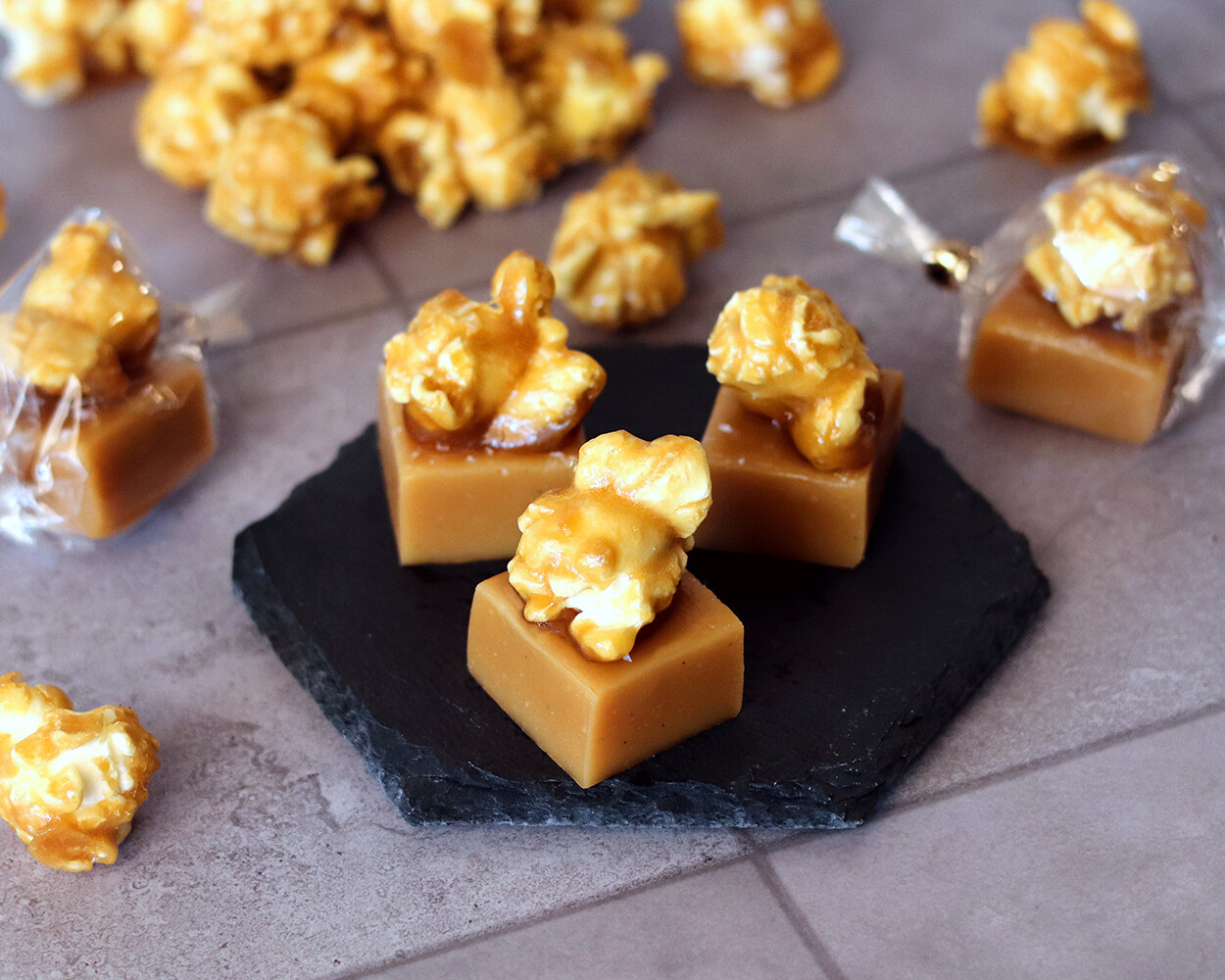
Caramel Apple Caramels
Since the 1950s, caramel apples have been one of the most iconic treats on the fair midway — that perfect collision of sweet, chewy, creamy caramel and crisp, sweet‑tart apples. These caramel candies capture all of that flavor in every smooth, creamy, perfectly chewy bite. The secret is a deeply concentrated apple cider reduction infused straight into the base caramel.
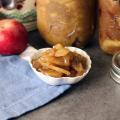
Caramel apple was the second inspiration for my Fair Food Caramel Flight, and honestly, it’s a flavor profile I never get tired of. You’ve seen it in my Caramel Toffee Apple Pie (made with my Caramel Apple Pie Filling) and my Caramel Apple Cheesecake Cookie Bars, just to name a few. But despite my enduring love for the flavor, I’m not actually a huge fan of classic caramel apples — the thin shell of caramel around a giant apple means the caramel disappears long before the apple does. Instead, my go-to fair snack is the caramel apple slices: a whole Granny Smith sliced and drizzled with warm, thick, gooey caramel. Every bite gets both apple and caramel, and you get that magical contrast of warm caramel against cold, crisp fruit.
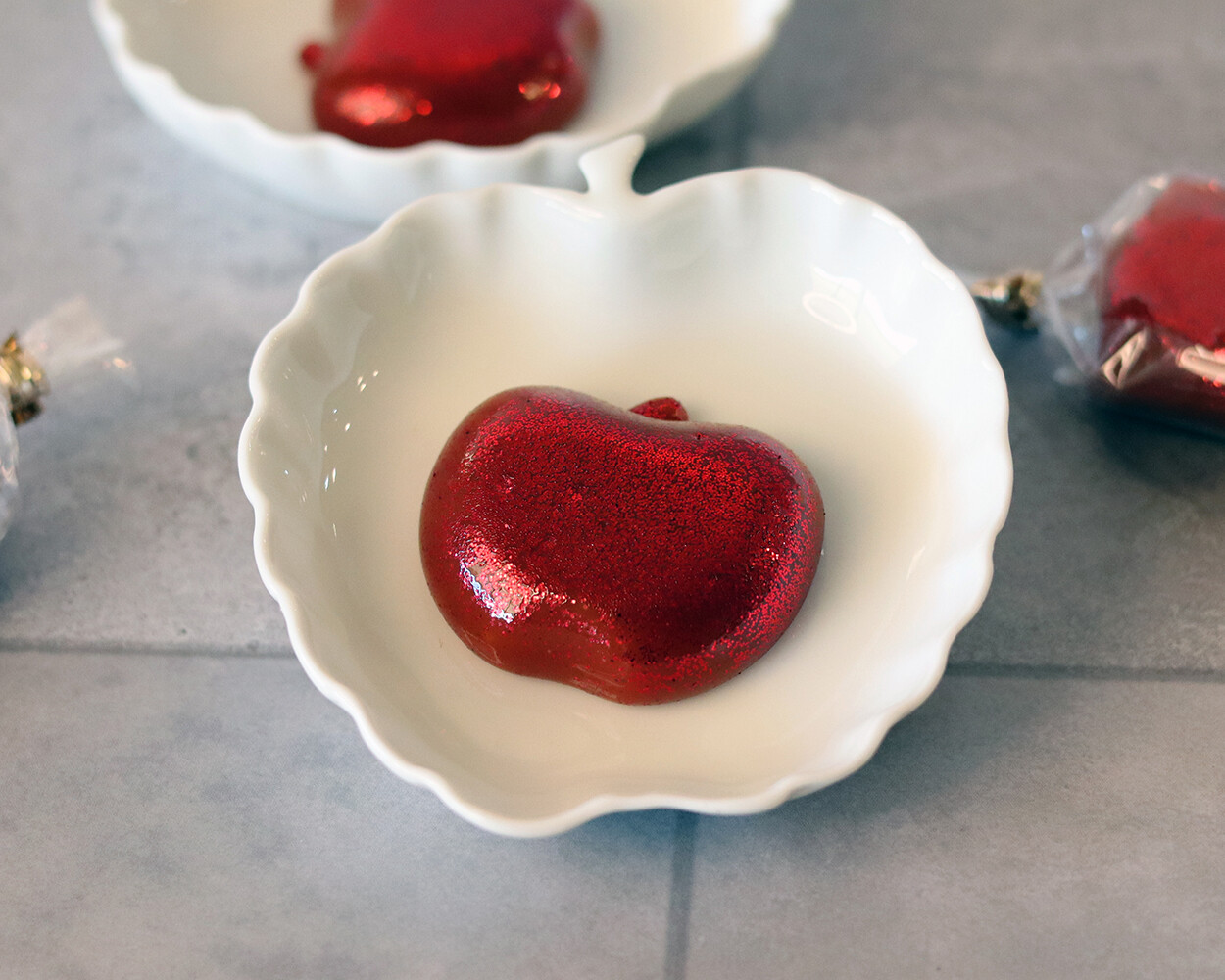
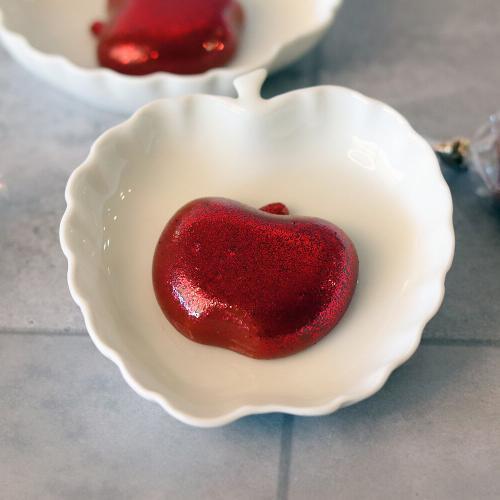
Those caramel apple slices were the real inspiration for these candies. Infusing the apple flavor directly into the caramel ensures that every bite has the perfect balance of caramel and apple – exactly what you always hope for in a caramel apple. And just like with the Caramel Popcorn Caramels, I wanted a visual cue to help the judges immediately understand the flavor. This time, I leaned into a molding technique – each roughly 1″ caramel is shaped like a perfect tiny apple using a silicone ice cube tray with apple-shaped cavities. To really sell the effect, I added just a touch of red food coloring to the caramel and finished them with a super glossy edible red glitter that amplified their natural shine and gave them a definite “magic apple” vibe.
Whether you go all‑in on the presentation or stick with classic caramel squares, the deep apple‑caramel flavor will transport you straight to your favorite fair memory.
Caramel Apple Caramels
Equipment
Ingredients
Method
- Line an 8×8 inch pan with non-stick foil or parchment paper.
- In a small saucepan, reduce the apple cider to 24-30ml – it will be a dark, syrupy consistency providing super concentrated flavor300 ml (1 ¼ cups) spiced apple cider
- While it is reducing, combine the heavy cream, butter and vanilla bean paste, set aside240 g (1 cup) heavy cream, 28 g (2 tbsp) unsalted butter, 10 ml (2 tsp) vanilla bean paste
- In a medium saucepan, combine the sugar, water, corn syrup and salt. Heat over medium heat, swirling the pan occasionally until it is a rich amber color.240 g (1 ¼ cups) sugar, 120 ml (½ cup) water, 60 ml (¼ cup) light corn syrup, 1/2 tsp (½ tsp) vanilla salt
- Remove from the heat and immediately add cream mixture and the reduced apple cider – stir to combine (the mixture may bubble furiously and rise in the pan and temperature will drop significantly).
- Return to the heat and cook, stirring frequently, until it reaches 255°-258°F. Remove from the heat and pour immediately into your prepared pan. Allow the caramel to set over night at cool room temperature before cutting into 1" squares and wrapping.
Notes
- Shaping the caramels: If you’d like to mold the caramels, pipe the hot mixture into small silicone molds (I used 1‑inch apple‑shaped cavities). The caramel is extremely hot, so wrap your piping bag in a folded paper towel for insulation. Let the caramels set overnight, then unmold and wrap individually. If they don’t release easily, freeze the mold for about 20 minutes before unmolding.
- Tinting the caramel: To give the caramels a soft red hue, add 4–6 drops of an oil‑based red food coloring immediately after removing the caramel from the heat, just before pouring into the pan or piping into molds.
- Why the cooking temperature is higher: This caramel cooks to a slightly higher temperature than classic soft caramels to account for the extra moisture and sugar from the cider reduction. Even though it’s only about 2 tablespoons, it meaningfully shifts the caramel’s structure. If cooked to the traditional 245°–250°F, the candies will still taste wonderful but will be softer and may flatten slightly when stored at room temperature.
Private Notes
Nutrition
Tried this recipe?
Let us know how it was!More recipes you might enjoy:

About The Author