Churro Caramels
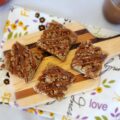
Fried sweets dominate the fair midway — quick, portable, indulgent, and impossible to resist. When I set out to capture that “splurge” energy in caramel form, churros were the obvious inspiration. I used lightly browned butter, cinnamon‑infused cream, and a final dusting of crunchy cinnamon sugar to distill the flavor of a warm, fresh‑fried churro into a sweet, creamy, chewy caramel.
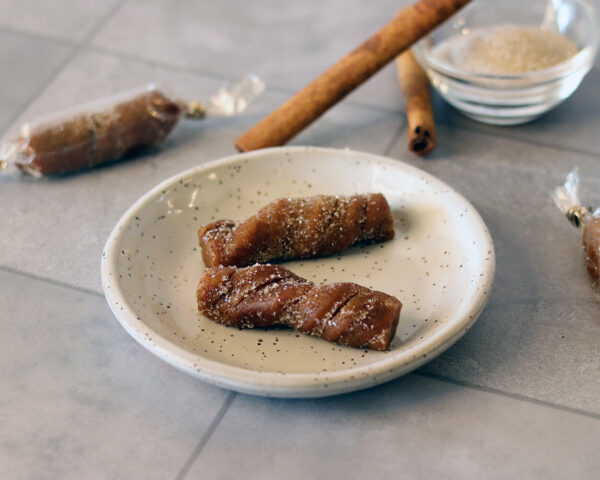
Churro was the final flavor inspiration for my Fair Food Caramel Flight, joining the Caramel Corn Caramels and the Caramel Apple Caramels. I knew I needed something to represent the fried foods found at every fair — something iconic, visually simple, and naturally compatible with caramel. Churros checked every box. They are ubiquitous at fairs, especially in the Southwest, instantly recognizable, and often paired with caramel dipping sauces or even filled with caramel.
Surprisingly, this flavor gave me the most trouble — for three very specific reasons:
- Bitterness: I wanted browned butter for that toasty, fried‑churro note. Normally, I take my butter to a deep golden brown, but caramel’s high cooking temperature kept pushing the milk solids further, tipping my first batch into bitterness. The fix was simple: stop the browning early, at a light golden stage, and let the caramel’s heat carry it the rest of the way.
- Grittiness: My first instinct was to add ground cinnamon directly to the caramel. Unfortunately, cinnamon is ground tree bark — it does not dissolve, ever — and even the tiniest amount left a faint grit at the end of each bite. I tried finer grinds and lower quantities, but the texture never disappeared. Switching to a cinnamon‑infused cream (using a whole cinnamon stick) solved the problem instantly, and I moved the ground cinnamon to the exterior coating where it belongs.
- Disappearing sugar: The churro identity depends on that sparkly cinnamon‑sugar coating, but in my early tests the sugar kept dissolving into the surface of the caramels within minutes or hours. I needed a coating that would hold long enough for judging. I finally landed on a coarser sanding sugar (technically classified as a sprinkle) and a double‑dusting method. While some sugar still melted away, enough remained to give the visual cue I wanted.
These caramels challenged me more than any other flavor in the flight, but the effort was worth it — they ended up being my kids’ favorite of the entire series. Now that the kinks are worked out, you should give them a try. They might just become your favorite too.
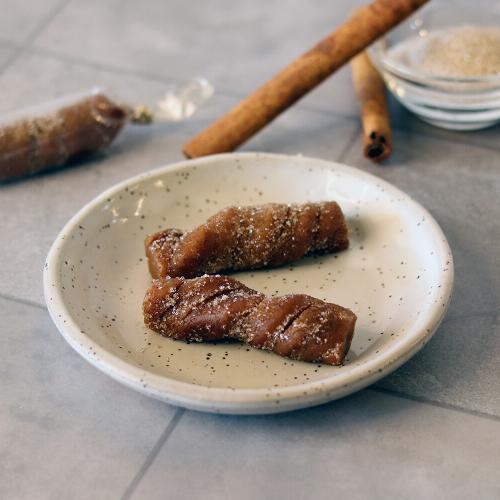
Churro Caramels
Equipment
Ingredients
Method
- Line an 8×8 inch pan with non-stick foil or parchment paper.
- In a small saucepan, melt the unsalted butter. Add the dry milk and cook, whisking constantly until the milk solids are golden brown and smell nutty.84 g (6 tbsp) unsalted butter, 12 g (2 tsp) non-fat dry milk powder
- Immediately add the heavy cream and vanilla bean paste – whisk to combine. Add the cinnamon stick and bring the mixture to a simmer. Remove from the heat and set aside to allow the cinnamon to infuse into the cream for about 20-30 minutes before making the caramel base.240 ml (1 cup) heavy cream, 15 ml (1 tbsp) vanilla bean paste, 1 cinnamon stick
- In a medium saucepan, combine the sugar, water, corn syrup and salt. Heat over medium heat, swirling the pan occasionally until it is a rich amber color.240 g (1 ¼ cups) sugar, 120 ml (½ cup) water, 60 ml (4.06 tbsp) light corn syrup, 1 tsp vanilla salt
- Remove from the heat and immediately add the cinnamon cream mixture, discarding the cinnamon stick – stir to combine (the mixture may bubble furiously and rise in the pan and temperature will drop significantly).
- Return to the heat and cook, stirring frequently, until it reaches 248°F. Remove from the heat and pour immediately into your prepared pan. Let the caramel cool for about 30 minutes, dust the surface with a generous layer of cinnamon sugar. Allow the caramel to set over night at cool room temperature before cutting into 1" squares and wrapping.cinnamon sugar for dusting
Notes
- To give your caramels the appearance of churros, let the caramel set fully, cut it into 2 1/2 inch by 1/4 inch strips. Lightly twist each strip until it has a ridged spiral appearance. Roll the twisted caramel in cinnamon sugar until fully coated. Wrap each candy individually.
- Regular sugar may dissolve into the caramels – if you want to ensure a beautiful sugar sparkle on the exterior of your caramels, try a sanding sugar mixed with cinnamon instead.
- If you want to substitute vanilla extract for the vanilla bean paste, you can – just remember to add the extract at the very end, stirring it in just before you transfer the caramel into the pan to set.
Private Notes
Nutrition
Tried this recipe?
Let us know how it was!More recipes you might enjoy:

About The Author