Sourdough Snickerdoodles
Snickerdoodles are a classic American drop cookie that first appeared in the late 1800s and have remained popular ever since. While slight variations in the recipe can shift them from thin and crispy to thick and chewy, they’re always known for their warm cinnamon flavor and signature tang from cream of tartar. This version amplifies those familiar notes with a generous amount of sourdough discard and cinnamon baked right into the dough, all supported by the rich, nutty depth of browned butter.
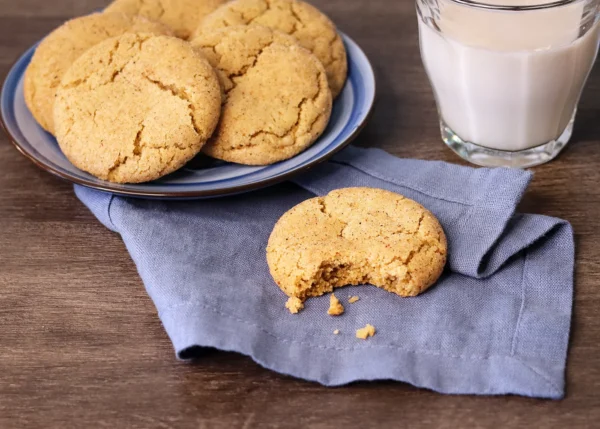
The COVID‑19 pandemic sparked a surge in creative uses for sourdough discard, inspiring bakers to add it to everything from brownies and cakes to quick breads and cookies. In sweet bakes, sourdough discard doesn’t usually make things taste “sour.” Instead, it adds a subtle tang that enhances flavors like chocolate, vanilla, and caramel, and it contributes to a softer, fudgier, more tender texture. Snickerdoodles, especially the thick, soft, chewy kind, benefit tremendously from this, gaining a wonderfully tender center, crisp edges, and a touch more tang than you might expect.
As I’ve mentioned before, sourdough baking is a journey my younger son and I started together. While he initially focused on breads, pretzels, pizza dough, and bagels, he’s become increasingly interested in exploring sweet sourdough bakes. He doesn’t always have the patience to rework a recipe if it doesn’t turn out perfectly the first time (that’s usually where I come in), and this recipe definitely required some tinkering. Some issues were self‑inflicted — like the mishap that led to last week’s Cranberry Pear Scones — but others came down to ratios in the original recipe.
Which recipe he chooses to try is often influenced by how much discard it uses. We maintain a fairly large starter, so there’s always plenty of discard to work through, and he usually wants to use as much as possible in a single bake. In this case, he picked the Sourdough Snickerdoodle Cookies recipe from Erica at Raspberries and Kohlrabi because it called for 120g (or 1/2 cup) of discard rather than the more typical 50-100g. He was also drawn to the photos of thick, soft cookies, and I loved the idea of incorporating browned butter.
Unfortunately, the cookies didn’t turn out as pictured when we made them — they spread too much, several merged together, and while the flavor was excellent, the texture wasn’t the thick, soft, tender cookie we expected. It’s worth noting that recipes can behave differently in different kitchens, where variables like humidity, flour brand, oven calibration, and even mixing technique can change the outcome. That doesn’t mean the original recipe is wrong; it simply means adjustments may be needed. So… we adjusted!
Here’s what we changed:
- Added dry milk powder to the butter while browning. This boosts flavor (more milk solids to caramelize) and adds a bit more structure by increasing solids in the dough. It only slightly reduces spreading, but every bit helps.
- Added 60g (½ cup) cake flour. This directly addressed the spreading issue. I chose cake flour instead of more bread flour because I wanted additional “filler” without adding too much protein (gluten).
- Replaced the 2 egg yolks with 1 whole egg. Yolks add richness but not structure. Using a whole egg brings in the white, which helps the cookies hold their shape. Also, after a few test batches, the extra whites were piling up — using a whole egg simply made more sense.
- Increased the brown sugar. Brown sugar retains moisture, helping cookies stay soft for several days. Yes, it can contribute to spreading, but not as dramatically as granulated sugar. And my son has a definite sweet tooth — he never objects to a little extra sugar.
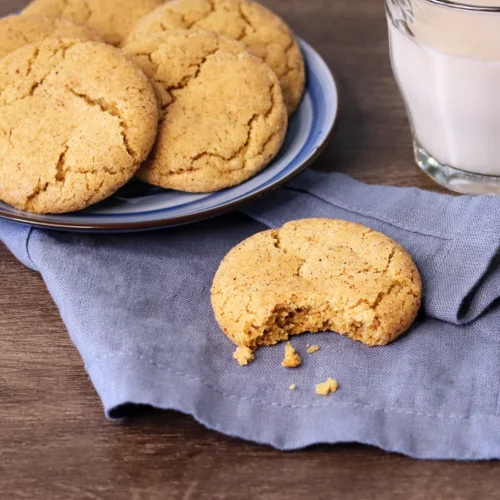
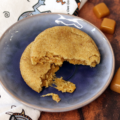
With these adjustments, we finally got exactly what we were aiming for: a snickerdoodle with amped‑up flavor, that elusive combination of a soft, tender center, chewy crisp edges, a crackled top, and just the right amount of spread. They stay soft for several days when stored at room temperature in an airtight container. If you’re looking for another way to use up sourdough discard, this recipe is highly recommended. And if you run into any unexpected behavior when you make them — drop me a comment. I’m always happy to help troubleshoot.
Sourdough Snickerdoodles
Equipment
Ingredients
Method
- Place the butter and milk powder in a medium saucepan over medium heat. Cook, stirring frequently, until bubbling and golden brown, about 3 to 5 minutes. Immediately transfer to a large mixing bowl to stop the cooking and set aside to cool for about 30 minutes or until it is starting to solidify around the edges.170 g (¾ cup) butter, 15 g (1 tbsp) dry milk powder
- In a medium bowl, whisk together the bread flour, cake flour, cream of tartar, baking soda, cinnamon and salt. Set aside.240 g (2 cups) bread flour, 60 g (½ cup) cake flour, 8 g (2 tsp) cream of tartar, 6 g (1 tsp) baking soda, 3 g (1 tsp) cinnamon, 3 g (½ tsp) salt
- Add the brown sugar and sugar to the cooled browned butter, beat until light and creamy.220 g (1 cup) brown sugar, 50 g (¼ cup) sugar
- Add the egg and vanilla, beat until well incorporated and smooth.1 egg, 10 ml (2 tsp) vanilla extract
- Stir in the sourdough discard until combined.120 g (½ cup) sourdough discard
- Add the flour mixture and stir just until all of the dry ingredients disappear. Cover the dough tightly and refrigerate for 2-3 hours or overnight.
- Preheat the oven to 375°, line 2 baking sheets with parchment or silpats
- In a small bowl, stir together the sugar and cinnamon.50 g (¼ cup) sugar, 9 g (1 tbsp) cinnamon
- Remove the dough from the refrigerator. Scoop ~2 tablespoons of dough (using a #40 cookie scoop), roll into a ball, roll the ball in the cinnamon sugar mixture and place on a prepared baking sheet. Repeat until all of the dough has been portioned out – leave about 2 inches between the dough balls on the baking sheet.
- Bake for 10-12 minutes, the cookies will look soft and puffy, the edges will be lightly golden and the tops will be slightly cracked. Avoid over-baking, you want a slightly crisp edge and a soft center. Cool on the pans for a couple minutes before transferring to a wire rack to cool completely.
Private Notes
Nutrition
Tried this recipe?
Let us know how it was!More recipes you might enjoy:

About The Author