Peanut Butter Mousse
Let’s play a little word association game. If I say “mousse” what words does that bring to mind? I’m guessing your list might include things like: airy, light, silky, delicate. Now, if I say “peanut butter” what springs to mind? I’ll bet this new list includes words like: thick, sticky, nutty, rich. It would appear that these word associations describe two items that can’t possibly coexist. But what if you could have a light, airy, silky mousse that is packed with all the intense, nutty, salty-sweet flavor of your favorite peanut butter? Well, you can have exactly that with this Peanut Butter Mousse.
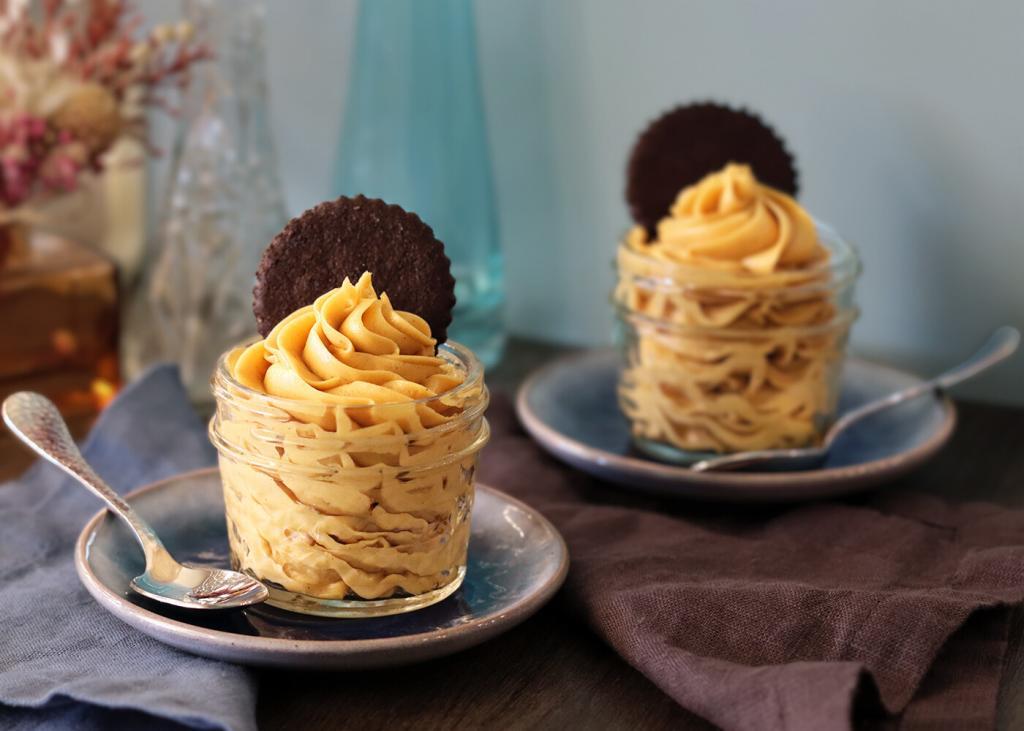
I have been refining this recipe for years. It all started with a peanut butter pie recipe that I decided to make one Christmas many years ago. The filling for that recipe was listed as “peanut butter mousse” – in addition to peanut butter, it called for cream cheese, powdered sugar and whipped cream. This is a very common approach for modern mousse recipes and there is certainly nothing wrong with it. The result is a mixture that is lighter, sweeter and creamier than straight peanut butter and the cream cheese ensures that it is stable enough to hold up in a slice of pie or as the filling in a cake.
The problem for me is that I adore a deep dish pie (I think you might have heard me allude to that a time or two). When you fill a truly deep dish pie with a modern peanut butter mousse the initial read might be light, airy and peanut buttery but by the time you finish a standard slice the filling begins to sit very heavy and the sweetness (thanks to powdered sugar) starts to coat your palate, despite the savory notes of the peanut butter and the tang of the cream cheese.
I knew that I wanted to find or create a peanut butter mousse recipe that did not include cream cheese or powdered sugar and that could stand on its own – a delicious dessert in its own right. One of my initial attempts was to modify my French Silk Pie recipe’s filling to use peanut butter instead of melted chocolate. Unfortunately, that didn’t work out as well as I had hoped. There was a slightly off aftertaste and an almost grainy quality.
I started combing the internet for recipes that employed more traditional or classic French pastry techniques. I finally landed on using a sabayon base – egg yolks and sugar whisked over a double boiler until they reach the ribbon stage and are warm to the touch. This method showed real promise, but I encountered two stubborn challenges: incorporating real peanut butter into a stable emulsion, and getting the gelatin to blend seamlessly.
- Encouraging three high fat components – the yolks, the whipped cream, and the peanut butter – to form a stable emulsion is a finicky process prone to breakage and curdling. This isn’t something that you can force – as my many broken and curdled mixtures can attest. I found several recipes that solved this with melted peanut butter baking chips, but that solves one issue while introducing a new one – too much sweetness.
- The gelatin, used to stabilize the mousse without adding any competing flavors or unwanted weight to the mixture, needs to incorporate cleanly and the common methods of slowly streaming in or tempering the gelatin before adding it as a last/late step in the preparation just weren’t working for me. From what I could tell, this seemed to be both a timing and temperature issue.
Finally, just last year, I was able to resolve both of these issues, creating what I believe to be the perfect peanut butter mousse – one that is light enough to feel ethereal, yet bold enough to deliver that deep, nutty intensity I’d been chasing from the start. And it’s equally satisfying whether eaten by the spoon or used to fill cakes, pastries or pies. In fact, I now make my own version of the peanut butter pie that launched this journey and it features this mousse standing tall as the foundational component of the pie. But we’ll come back to that later. For now, just savor the mousse—it’s absolutely worth it.
Equipment
Ingredients
Method
- Place the gelatin sheets in a small bowl of cold water to bloom. Set aside.2 ½ sheets gold leaf gelatin
- In a medium bowl, whip the cream to soft peaks and set it in the refrigerator while you prepare the other ingredients.600 ml (2 ½ cups) heavy cream
- Combine the yolks and sugar in a large heat safe mixer bowl. Add the vanilla bean or extract and whisk to combine.5 large egg yolks, 112 g (4 oz) granulated sugar, 1/2 (½) vanilla bean
- Set the bowl with the yolks over a pan of simmering water (make sure the bottom of the bowl doesn't touch the water). Whisk continuously until the mixture is warm to the touch and the sugar has fully dissolved.
- Gently squeeze excess water from the bloomed gelatin. Add the gelatin to the warm yolk mixture and whisk until it has melted and fully incorporated.
- Move the bowl to the mixer (or use a hand mixer) fitted with a whisk attachment and whip until the yolks are completely cooled and have lightened in color and texture.
- Put the peanut butter in a medium bowl. Remove the whipped cream from the refrigerator and add about 1/3 of it to the peanut butter. Fold the whipped cream and peanut butter together until fully combined with no white streaks. The peanut butter may appear to seize but keep working gently until it comes together.392 g (1 ½ cups) creamy peanut butter
- Fold the peanut butter and cream mixture into the yolk mixture until fully incorporated.
- Gently fold the remainder of the whipped cream into the peanut butter, cream and egg yolk mixture. Try to retain as much air as possible, but make sure there are no white streaks remaining.
- The mousse can be served on its own or it can be used to fill cakes, pies or other pastries. Chill for at least several hours, but preferably overnight before serving.
Private Notes
Nutrition
Tried this recipe?
Let us know how it was!More recipes you might enjoy:
About The Author
